5/19/10

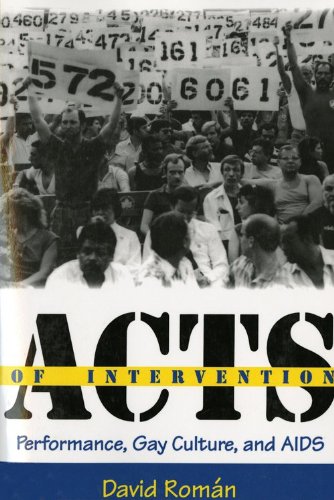
Acts of Intervention: Performance, Gay Culture, and AIDS (Unnatural Acts: Theorizing the Performative)

Acts of Intervention: Performance, Gay Culture, and AIDS (Unnatural Acts: Theorizing the Performative) Review


This book is a valuable source for the variety of performances that have accompanied the appearance of AIDS in the United States. Roman carefully evaluates how theatre and performative events, from the activism of ACT-UP to Magic Johnson's announcement of his HIV status, have shaped the way that AIDS has been portrayed. In his introduction, Roman outlines his positionality within his subject, remaining critically responsible while acknowledging the impossibility of "objectivity." An important aspect of his critical approach is his "generosity" towards the performances he analyzes. He states that his purpose in the book is not to evaluate the performances for their artistic merit, but to show their position within the overall field of AIDS performance. He shows how performances that may have been "bad" nonetheless had an impact on their audience. Roman never succumbs to romanticism or nostalgia, but approaches his subject with reverence and respect. Roman's book leaves room for others to continue within the subject of AIDS performance and will continue to be a valuable source for those working in the field.


Acts of Intervention: Performance, Gay Culture, and AIDS (Unnatural Acts: Theorizing the Performative) Overview


Acts of Intervention examines the ways that gay men have used theatre and performance to intervene in the AIDS crisis. It discusses dramatic texts and public performances -- from cabarets and candlelight vigils to full-scale Broadway productions such as Angels in America and Rent -- that have shaped, and been shaped by, the history of AIDS in national, regional, and local contexts. Román examines mainstream as well as alternative and activist forms of theatre, including solo performance, community-based projects, mixed-media events, activist demonstrations, and AIDS educational theatre initiatives.

Acts of Intervention traces the ways in which performance and theater have participated in and informed the larger cultural politics of race, sexuality, citizenship, and AIDS in the United States during the last fifteen years. The book discusses not only how the theater has provided a forum for gay male response to the epidemic but also the degree to which those responses have in turn shaped the ideological formulation of AIDS. Román offers a new method for mapping the relation between AIDS and representation by combining interpretive strategies from performance theory, gay and lesbian studies, critical race discourse, and cultural studies.

This book is dedicated to writing the history of theatrical interventions in the AIDS epidemic, including performances whose official history has been largely neglected or forgotten. Because many early performances about AIDS left little or no documentation, the task of constructing an AIDS theatre historiography confronts immediate problems and limitations.

Acts of Intervention argues that the history of AIDS performance is located at the juncture of memory and disappearance, of mourning and survival, of representation and its impossibility in the context of epidemic loss.


Acts of Intervention: Performance, Gay Culture, and AIDS (Unnatural Acts: Theorizing the Performative) Specifications


AIDS has had myriad effects on gay culture, and its influence on gay writing and theater have perhaps been the most notable. While novels and poetry by gay men and lesbians have recorded the epidemic, performance art has most closely reflected and embraced AIDS activism. David Roman's Acts of Intervention chronicles the emergence of AIDS as a subject in performance and theater, from the post-modern, high-camp, drag extravaganzas of Lypsinka to the overtly political parody of the Afro Pomo Homos to Tim Miller's playful, nude monologue performances: art as politics. But Roman is as interested in politics as art, and much of Acts of Intervention impressively discusses how public activity protests against government AIDS policy are "performances" themselves. Roman's knowledge of AIDS, art, and gay culture is exhaustive, and his writing is clear, succinct, and informed. Gay culture and art has always been about becoming visible and powerful, and Acts of Intervention charts how this has occurred over the past 17 years.

Available at Amazon Check Price Now!


*** Product Information and Prices Stored: May 19, 2010 19:52:24

My Links : Watch TV Show Episodes Online Now
5/17/10

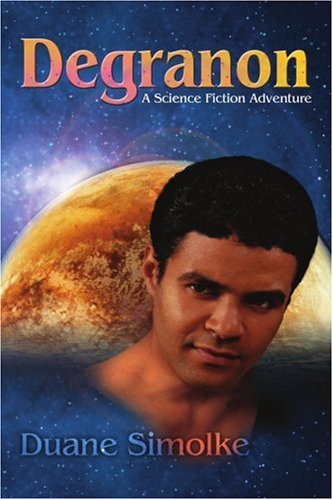
Degranon: A Science Fiction Adventure

Degranon: A Science Fiction Adventure Review


I came to Duane Simolke's sci-fi novel, DEGRANON, after first having sampled the author's short stories, as included in THE ACORN GATHERING, Writers Uniting Against Cancer.

DEGRANON is sci-fi that warrants the attention of any serious aficionado, gay or straight, fascinated by alien worlds that mirror our own world -- complete with mind-bending drugs, political machinations, rigid class structures and struggles, cults, small-mindedness, corruption at all levels, loves, hates, aspirations, frustrations -- even bigotry; the planet Valchondria has mainly color-blind societies, long-eliminated prejudices arising from different colored skins having merely evolved into repression of the color-sighted minority by the majority who only see in black and white.

Admitteldy not a breeze-through novel, with its time-travel elements that take the plot from past to present to future to present to past, and its comments upon societal mores and relationships -- experienced through the complications of time travel -- it's nonetheless worth the effort for those who don't mind "food for thought" served up with the dessert of sheer good reading.

NOTE: For those who might prefer an experimental dose of Simolke, before taking on this, his 197-page sci-fi opus, try his and his fellow authors' "shorts" in his non-sci-fi THE ACORN GATHERING which -- all author and editor royalties donated to the American Cancer Soceity -- provides the dual rewards of good reading and benefiting a good cause.


Degranon: A Science Fiction Adventure Overview


The scientist Taldra is one of the few people on the planet Valchondria who can see in color, but a police force called "the Maintainers" won’t let colorsighted people reveal their ability to the public. Duane Simolke explores that "closet" metaphor more in this revised edition of Degranon; he also recreates three of the major characters as gay men. Taldra’s family becomes entangled with a violent religious fanatic from a war-torn planet called "Degranon." The first edition of Degranon received a StoneWall Society Pride in the Arts Award, and Simolke’s publisher, iUniverse, named Degranon one of their Editor’s Choice books.


Available at Amazon Check Price Now!


*** Product Information and Prices Stored: May 18, 2010 09:16:49

Friends Link : Watch TV Show Episodes Online Now

5/16/10

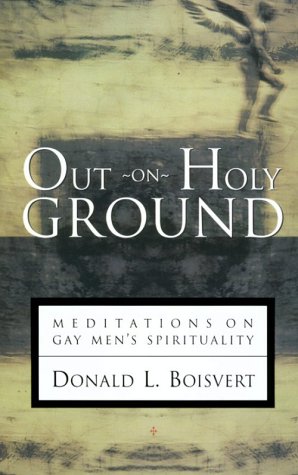
Out on Holy Ground: Meditations on Gay Men's Spirituality

Out on Holy Ground: Meditations on Gay Men's Spirituality Review


Available at Amazon Check Price Now!


*** Product Information and Prices Stored: May 17, 2010 07:13:09

Recommend : Watch TV Show Episodes Online Now

5/15/10

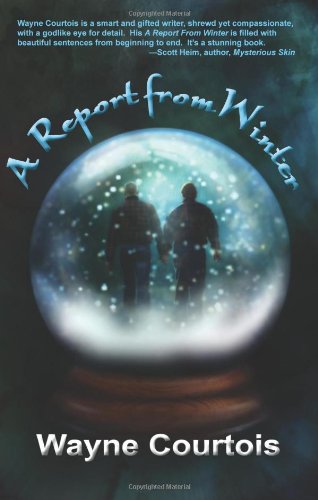
A Report from Winter

A Report from Winter Review


This memoir has already received high praise from numerous quarters and after reading the gripping account, I can add that it is all well deserved. This honest account is filled with memories and dreams of the author's childhood, his first date with his partner, and his quiet dysfunctional family. Although the summary calls this book stubbornly unsentimental, I would argue that the narrative is heavily sentimental but written with a brutal, almost painful honesty that yearns for something more than the truth will allow. Either way, this stark and evocative story will grip readers as it shows the love and pain within relationships.

Although the story is about the author's dying mother and coping with her final days, there are several asides included to keep the pace moving. This also serves to lighten the somewhat oppressive tone when recalling the painful death and indignity of illness. Here the author parallels a story of his childhood during a particularly bad snowstorm in Maine and shows how the pattern of his family is already set and not to be altered through the decades. His unhappy, perpetually disappointed mother coupled with an almost absentee father shown in stark contrast to the confused rejection of his brother, this one scene stretched out and told over the course of the book highlights several important factors. The first is the family dynamic, but more importantly, the author's place and ultimately his discovery of his sexuality.

At the same time, the narrative shows the warm and loving relationship with his partner, Ralph, through unconditional acceptance and love. The telling is brutally honest in exposing the author's own perceived weaknesses and faults while acknowledging that Ralph's strength and love is essential to his happiness. If anything, the narrative is almost too stark and open. Often the negative actions, thoughts, and desires are shown blatantly and without any positive context to soften the instinctive thoughts that are all too human. Tempered somewhat by the humor and wit woven into the various remembrances, the empty and cold landscape is often reiterated in the emotions and actions of various people in the book.

The writing itself is engaging and often invites the reader to laugh or cry with the emotions and actions depicted. The honesty of various situations is never in question, as every detail is offered with a painful unveiling from the aching need to be accepted and loved in places that will never happen to relying on the warmth and care of his partner. Although this makes the story difficult to read in places, the pacing and placement of the details keeps the book from being too dark and depressing. Perhaps the saddest detail is not in the unfortunate death of his mother but in lacking that much needed acceptance that was always craved. Such simple need is portrayed in a loving, sentimental, and brutal manner creating a gripping and enthralling story.

This memoir will resonate with many as the dysfunctional, cold family is not a rare experience among readers. The inability of two gay brothers to find common ground, however painfully so, will also be recognizable just as the witty retelling of a first date will evoke emotion in even the hardest hearts. The stunning description of Maine in winter with its beauty, chill, and heart breaking cold is incredible and leaps off the page. While not always an easy book to read, the emotion and context afforded make it well worth the journey.


A Report from Winter Overview


A Report from Winter is a death-in-the-family story, a love story, and a meditation on the meaning of ''winter''--as a season and as a metaphor for family relationships.

It's January 1998, and southern Maine is recovering from one of the worst ice storms in history. Into this unforgiving environment comes the author, flying home from Kansas City after a ten-year absence. His mother, Jennie, is dying of cancer. Though receiving excellent care in a nursing home, she has lost the ability to communicate. Needing support, Wayne makes an SOS call to Ralph, his longtime partner. Ralph boards a plane to Portland for his first exposure to a Maine winter, and to Wayne's family as well, including a feisty aunt and an emotionally distant brother. The contrast between a nurturing gay relationship and dysfunctional family bonds is as sharp as the wind sweeping in from the sea.

Stubbornly unsentimental, A Report from Winter weaves childhood memories of winter with the harsh realities of living in a family where there's not enough love to go around. The memoir is a tribute to hard-won relationships built on mutual trust and understanding, defying an uncaring world.


Available at Amazon Check Price Now!


*** Product Information and Prices Stored: May 15, 2010 13:48:19

Visit : Watch TV Show Episodes Online Now

5/12/10

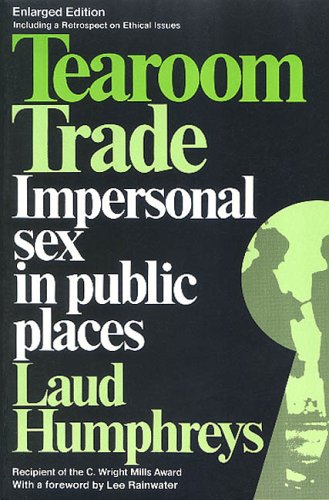
Tearoom Trade: Impersonal Sex in Public Places (Observations)

Tearoom Trade: Impersonal Sex in Public Places (Observations) Review


This book is the first and one of the few and to study male-male sexual behavior as it occurs between men who do not primarily identify themselves as being homosexual or bisexual. Previous studies had been largely clinical, based on the reports of individuals undergoing psychotherapy, and most ethnographic studies have been of more or less gay-identified communities -- gay bars, gay organizations, gay neighborhoods -- or male prostitutes. This was the first to study men who have sex with men but who mostly have lives as apparently ordinary, married heterosexuals. The study revealed some surprising facts about such men, and fired a controversy over sociological ethics and propriety that continues to this day.

During the course of a year, Humphreys observed male-male sexual activity in certain public restrooms (known in gay slang as "tearooms") in an unidentified city in the US. A year later, after having identified many of the men he had observed, he arranged to interview them as part of a different, general sociological study, which allowed him to ask a number of questions about their backgrounds and personal lives without revealing their clandestine activities; he also approached about a dozen of the men in the tearooms themselves and was able to interview them openly.

Humphreys' findings contradict a number of previously held assumptions about male-male sexual activity, and carry some important recommendations. One is that the "seduction of teenagers" does not occur in these public places, and in fact teenage boys are actively excluded despite their frequent desire to participate. Another is that the chance of anyone being unwillingly approached in a public restroom, unless he is behaving in such a way as to invite sexual advances, is practically nonexistent. Third, the most frequent criminal behavior which results from these practices is blackmail, primarily from the policemen on the vice squad who are assigned to eliminate sex in public places.

Finally, the book devotes a significant space to the ethical issues which were raised by its methodology. At the time, practically nothing was known about homosexual behavior in the general population, despite a great deal of attention from police, clergy, and politicians. The study was carried out with no untoward effects, and several participants stated that they were glad of the opportunity to talk about themselves. However, the study involved potential danger to the subjects in the event that confidentiality had been broken, and the subjects could not be asked for consent without fatally compromising the study. The debate which followed among sociologists, journalists, and ethicists, regarding the balance between society's need for objective knowledge and the individual's right to privacy, has continued to this day. It is a must-read for anyone concerned with the debate over research on human behavior, both for the historical documents it contains (several of the major criticisms and defenses of the study) and for the way in which it is often misrepresented today by its critics.

The book is well written and extremely readable, and gives some interesting insight into both the state of American homosexual behavior and of the political climate in the years immediately before Stonewall. It won the C. Wright Mills Award of the Society for the Study of Social Problems, and the author was later elected to the national board of a homosexual rights organization, in part because of the importance of this research. I highly recommend it to anyone interested in the sociology or history of homosexuality.


Tearoom Trade: Impersonal Sex in Public Places (Observations) Overview


From the time of its first publication in 1970, Tearoom Trade engendered controversy. It was also accorded an unusual amount of praise for a first book on a marginal, intentionally self-effacing population by a previously unknown sociologist. The book was quickly recognized as an important, imaginative, and useful contribution to our understanding of "deviant" sexual activity. Describing impersonal, anonymous sexual encounters in public restrooms - "tearooms" in the argot - the book explored the behavior of men whose closet homosexuality was kept from their families and neighbors. By combining participant observation with structured as well as informal interviews, Tearoom Trade still furnishes a controversial example of recent social science methods.

This enlarged edition of Tearoom Trade includes the original text, together with a retrospect. The material added includes a perspective on the social scientist at work and the ethical problems to which that work may give rise, along with debate by the book's initial critics and proponents.


Available at Amazon Check Price Now!


*** Product Information and Prices Stored: May 13, 2010 07:54:48

Visit : Watch TV Show Episodes Online Now

5/11/10

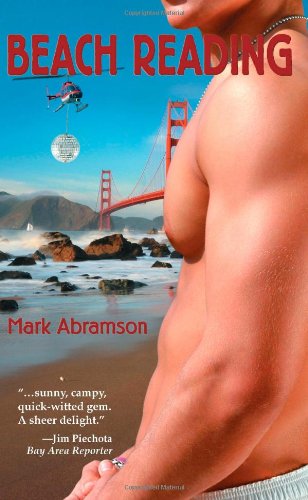
Beach Reading

Beach Reading Review


Abramson, Mark."Beach Reading", Lethe Press, 2008.

A Romantic Comic Mystery

Amos Lassen

I just finished reading Mark Abramson's "Beach Reading" and the only word I can think of to describe it is "WOW!". It's a short book--only 193 pages--and each of those pages is a pleasure.
The story takes place in San Francisco and it manages to cover many of the issues of gay life including homophobia, relationships, and S&M (stand and pose) as well as others. "Beach Reading is a "love song to San Francisco" and I felt like singing along as I read it. It seems that city on the bay has been the center of gay life forever and after reading this you will understand why.
Gay male tourists find their way to San Francisco by planeloads for what is to be "the party of the decade", a tribute to Sylvester at the Moscone Center. As it happens at major gay events, it is not only gay men who arrive and the Christian right led by Arlo Montgomery also finds his way there. He and his cohorts have come to protest the event and they have set up camp a few blocks away from the festivities at the Civic Auditorium. Tim Snow, a gay activist, plans to protest the protest and the fun and games begin.
I understand that this is the first in a series of books that Mark Abramson is writing on gay life. I plan to be a major fan and I will be bringing news of them when they are published. I also must commend Steve Berman of Lethe Press for picking up the slack that the folding of Harrington Park Press created.


Beach Reading Overview


Gay tourists are arriving in San Francisco by the planeload for the party of the decade at the Moscone Center, a tribute to a late disco star. On the same night as the dance festival, a infamous evangelist plans to bring his nationwide crusade against gay rights to the Civic Auditorium a few blocks away. Tim Snow finds himself caught in the middle when his activist friends plan a protest. For Tim, the fun and the intrigue are about to begin.

Beach Reading , a San Francisco Chronicle best-seller, is equal parts mystery and romantic comedy set in romantic San Francisco with a taste for adventure, a touch of magic.


Available at Amazon Check Price Now!


*** Product Information and Prices Stored: May 12, 2010 06:00:53

Related : Watch TV Show Episodes Online Now

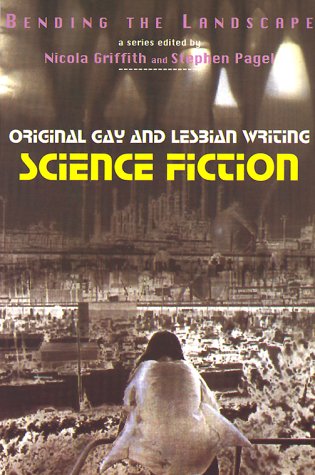
Bending the Landscape: Original Gay and Lesbian Writing: Science Fiction

Bending the Landscape: Original Gay and Lesbian Writing: Science Fiction Review


Bending the Landscape: Science Fiction, is the first of a three-part series of "original gay and lesbian writing" edited by Nicola Griffith and Stephen Pagel (not very coincidentally, a participant in Outworlders, a local Atlanta GLBTQ sci fi / fantasy fan group and the parent group to a book group I belong to.) After choosing Storm Constantine's The Sign for the Sacred as our group's first fantasy selection, we turned to Bending as a book that would cover science fiction but also appeal to a variety of tastes. Also playing into the selection was the fact that the book had been awarded a number of extremely prestigious awards and Stephen Pagel would possibly come to our meeting to discuss it (which he did!)

When I started on Bending, I really didn't quite know what to expect; most of my affection for science fiction comes not from books but from movies and television, so I really didn't know how much of it I would enjoy. I soon discovered that my wariness was unfounded, for not only did I enjoy the science fiction, but the designation "science fiction" didn't really cover what I was reading -- I found a lot of what I considered "fantasy" as well. I also discovered that Griffith and Pagel made some truly excellent story selections.

Bending features stories which, so Pagel told us himself, cover the full spectrum of science fiction -- everything from futuristic private eye stories to time travel escapades to stories of alien worlds to explorations of cyber consciousness and gender identity. Clearly, this was not a book simply thrown together or with the lowest common denominator in mind. Instead, it's a book in which writers of all sexual orientations explore situations that explore one of science fiction's enduring themes, "the Alien, the Not-Self, the Other," with the "other" a lesbian or gay man (interpreted, so the book's introduction admits, "liberally.")

There were a lot of stories in Bending that I loved and several which actually reminded me strongly of Storm's stories. For example, "The City in Morning" by Carrie Richardson reads like a chapter from a lost Storm Constantine novel. "On Vacation" is a subtly hilarious tale of aliens living on earth a la Men In Black. Far and away my favorite story, which I must have reread a dozen time the day I first read it, was the beautiful, elegant and sweetly heart-rending "Silent Passion" by Kathleen O'Malley. Set in A.C. Crispin's StarBridge universe, to which O'Malley has contributed two books), the story is one I summed up to a friend as featuring "giant gay, signing, alien crane-creatures" and their interaction with gay human couple, whose relationship turns a new corner when the narrator is finally able to move beyond the pain of human intolerance. It's a beautiful, life - and love-affirming story which I doubt I will ever forget and which I plan to lead me on to O'Malley's two StarBridge novels, which, so Pagel tells me, feature these same amazing crane-aliens.

Knowing there are two more Bending anthologies (fantasy and horror), I am sure I have many more great tales ahead of me.


Bending the Landscape: Original Gay and Lesbian Writing: Science Fiction Overview


Volume II of the award-winning collection of gay and lesbian short fiction exploring the horror genre.

On the heels of the phenomenal success and acclaim of Volume I (Science Fiction), Bending the Landscape: Horror brings together a tantalizing slew of truly "horrific" tales guaranteed to provoke, entertain and inspire fear. Nicola Griffith and Stephen Pagel have, once again, compiled an exciting array of never-before-published stories both from talented newcomers and award-winning genre veterans. In Kraig Blackwelder's Coyote Love, a man wakes up in a stranger's bed, not knowing how he got there. Terror ensues as the reader is shown just how far a person is willing to go to deny reality. In The WereSlut of Avenue A, Leslie What shows us that change is not always a good thing as we witness what may or may not be a physical transformation into something inhuman. These stories, written by writers both gay and straight, incite fear and spur thought. Contributors include Brian A. Hopkins, Holly Wade Matter, A.J. Potter, Carrie Richerson, Mark Tiedmann, Alexis Glynn Latner and more.


Bending the Landscape: Original Gay and Lesbian Writing: Science Fiction Specifications


This second volume of Nicola Griffith and Stephen Pagel's Bending the Landscape anthology series focuses on science fiction stories (the first book covered fantasy, and the third will cover horror). The editors asked contributors to "imagine a different landscape... some milieu that had not happened" and then address the theme of Alien or Other, with the Other being a lesbian or gay man. Since the writers include men and women, gay and straight, the results are fascinating and kaleidoscopic.

One of the best stories in this stellar bunch is Ellen Klages's "Time Gypsy," a "lesbian time-travel-romance-revenge story" about a scientist who discovers love in an unlikely way. L. Timmel Duchamp's "Dance at the Edge" is a heartbreaking story of visibility and strength, and Richard A. Bamberg looks at what it might be like to be the last gay person on Earth in "Love's Last Farewell."

Big name authors like Charles Sheffield, Nancy Kress, Stephen Baxter, and Elizabeth Vonarburg contribute stories as well. The science fiction volume, like all the Bending the Landscape anthologies, addresses universal themes of otherness, love, and loss. Great reading for the 21st century. --Adam Fisher

Available at Amazon Check Price Now!


*** Product Information and Prices Stored: May 12, 2010 04:50:18

Visit : Watch TV Show Episodes Online Now

5/10/10

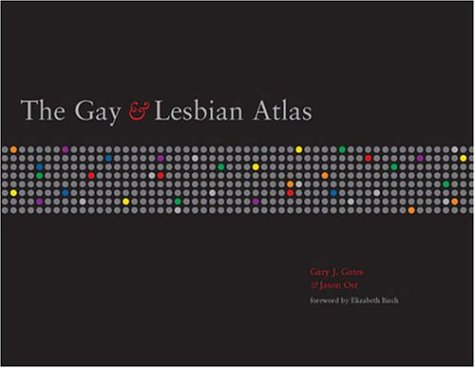
Gay & Lesbian Atlas

Gay & Lesbian Atlas Review


Gary Gates and Jason Ost have presented a carefully crafted volume, filled with gist for tremendous insights. Their methodology is clearly explained, and they have done an admirable job of trying to portray cartographic imagery of the gay and lesbian population of the United States.

This volume certainly belongs in every public and school library in the country.

And yet, I experienced a certain amount of frustration while poring over the state-by-state and city-by-city maps portrayed in this volume. This frustration does not stem from the admirable work of the authors, but rather from three sources largely beyond their control.

First among these sources of frustration is that the census data collected on same sex coupling, enticing as it is, leaves much to be desired. The census methodology makes the imputation of lesbian and gay populations difficult, at best. The only enumeration is of co-habiting "unmarried" partners of like gender. Left out are couples where neither is the 'head of household', couples not living in the same residence, or who are living in group quarters (such as housing complexes, nursing homes, and correctional facilities). Also left out are single gay & lesbian people, those who do not declare their relationship as an "unmarried partnership", and those who are currently cohabiting with a partner of dissimilar gender, or are in some other form of less traditional relationship status.
The limitation of our knowledge base to cohabiting couples of similar gender is frustrating when trying to imagine the exhuberant diversity of our communities as displayed across geographic space.

My second frustration stems from the difficulty in displaying information that is highly dependent on population density. In the maps these authors portray, the vast majority of the country looks as though there is a paucity of gay and lesbian couples. This is chiefly due to the fact that rural settings take up a lot of "space" on the map, while urban clusters are often barely visible, let alone the small-area variation in the prevalence of couples across the urban landscape.
The authors have tried to overcome this difficulty somewhat by displaying blow-ups of various cities (such as San Francisco, Houston, Boston, etc.), but often these maps of cities are so de-contextualized from their surroundings that it is difficult to visualize the residential patterns of similar gender couples. For example, Boston is displayed without the integrally linked cities of Cambridge and Somerville that (at least anecdotally) contain a large proportion of Boston's gay and lesbian community.

My third frustration stems from the fact that the authors have presented only one measure of gay & lesbian residental patterns (to be fair, three measures: one for gays, one for lesbians, and one combined). This is a relative measure, which is a bit more difficult to interpret than an absolute measure, such as the proportion of similar gender couple-headed households, would have been, because the 'normal' reference for each state is different, making parts of rural North Dakota look as queer-friendly as Manhattan.
Furthermore the authors have limited themselves to a single gay/lesbian index, presumably because of the prohibitive cost of producing a volume with multiple indices. The drawback to this is that a variety of audiences will be interested in more than the relative concentration of lesbian and gay households to all households. The census, for instance, has elected to present data on same sex households as a proportion of all coupled households, rather than including single person households, or households in which the adults have no stated relationship. Other viewers may wish to consider only those households where the head is over a given age.

Much of these difficulties could be overcome by creating an accompanying website which would allow a reader/viewer to zoom in and out according to their own particular preferences, and to display the index of lesbian/gay residential density of greatest interest to them.

All in all, this volume is a tremendous effort and acheivement, hampered not by the authors' originality or effort, but by inescapable quirks of census data collection, and the ability of our minds to grapple with spatial information.

Bill Jesdale, Providence RI (by the way, the finest queer community in the country...)


Gay & Lesbian Atlas Feature


  • ISBN13: 9780877667216
  • Condition: NEW
  • Notes: Brand New from Publisher. No Remainder Mark.


Gay & Lesbian Atlas Overview


While the words "we are everywhere" can be frequently heard at gay and lesbian political events, The Gay and Lesbian Atlas provides the first empirical confirmation of this rallying cry. Drawing on the most recent data from the U.S. Census, this groundbreaking work offers a detailed geographic and demographic portrait of gay and lesbian families in all 50 states plus the top 25 U.S. metropolitan areas. These results, presented in more than 250 full-color maps and charts, will both confirm and challenge anecdotal information about the spatial distribution and demographic characteristics of this community. It is probably no surprise that San Francisco, Key West, and western Massachusetts all host large gay and lesbian populations, but it might surprise some that Houston, Texas, contains one of the ten "gayest" neighborhoods in the country, or that Alaska and New Mexico have high concentrations of gay and lesbian couples in their senior populations. The Atlas is a unique and important resource for the political and public policy communities, public health officials, social scientists, and anyone interested in gay and lesbian issues.


Available at Amazon Check Price Now!


*** Product Information and Prices Stored: May 11, 2010 03:50:13

Tags : Watch TV Show Episodes Online Now
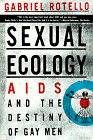
Sexual Ecology: AIDS and the Destiny of Gay Men

Sexual Ecology: AIDS and the Destiny of Gay Men Review


I am amazed that I missed this book until a couple months ago. Indeed, it amazes me how few people have been motivated to write a review of it.

Rotello really explains in a simple sensible understandable fashion how the AIDS epidemic resulted from changes in technology , sexual role changes among gay males , social patterns of IV drug users (those in NYC shared needles in galleries while on the West Coast most used their own works at home and escaped the epidemic) and finally how hyperpromiscuity in large cities were the core centers for spreading this epidemic.

Most importantly, Rotello sees a continuing disaster in the gay community if old patterns of multi-partner 1970s promiscuity are reverted to by today's generation.

This is a must read book for anyone touched by this disease. It should get 50 stars.


Sexual Ecology: AIDS and the Destiny of Gay Men Overview


ntensively researched, passionately argued, and intellectually rigorous, Sexual Ecology sounds a clarion call for the controversial revision of the gay male community's beliefs about and approaches to AIDS. It is widely agreed that Sexual Ecology is the first book since And the Band Played On to fundamentally challenge social perceptions of this virulent modern plague. Gabriel Rotello argues that a series of accepted views, such as "there are no such things as risk groups, only risky behaviors," the product of well-intentioned attempts to combat social stigma are fallacies that have hampered our attempts to study the disease. From the false security of condoms to the seeming magic bullet of protease inhibitors, simplistic ways of looking at AIDS have allowed thousands of gay men to become infected each year. Weaving together the intertwining threads of sexual politics, science, and survival, Sexual Ecology constructs an incisive, even-handed discussion that has been debated by activists and affirmed by scientists and epidemiologists, and that is relevant to all our lives.
The extremely strong response to the hardcover and wide media coverage confirms the timely nature of the subject.
Includes a new afterword by the author.


Sexual Ecology: AIDS and the Destiny of Gay Men Specifications


There was a time, before AIDS, when gay male culture was often synonymous with multiple partners, bathhouses, and an emphasis on youth and physical beauty. Monogamy was identified with "straight" culture and therefore something to be resisted. Even when the AIDS epidemic was at its height, the gay community promoted condom use but did little to discourage risky behavior. In his groundbreaking book Sexual Ecology, author Gabriel Rotello views the epidemic in a new way: as part of an ecological system. Rotello's approach, while unique in the study of AIDS, is one familiar to the environmental movement. He sees the disease not as a discrete element, but as part of a system of "behaviors, thoughts and feelings that made gay culture so susceptible to AIDS."

Although Rotello aims his book primarily at a gay audience, Sexual Ecology has a wider appeal. His chronicle follows the growth of promiscuity among homosexual men through its promotion by bathhouse owners and the gay media. Equally fascinating is the current trend toward more mainstream values among many gay men. Finally, his suggestions for making gay culture sustainable (in the words of environmental science) instead of self-destructive provide serious food for thought and for debate.

Available at Amazon Check Price Now!


*** Product Information and Prices Stored: May 10, 2010 18:54:35

See Also : Watch TV Show Episodes Online Now
5/8/10

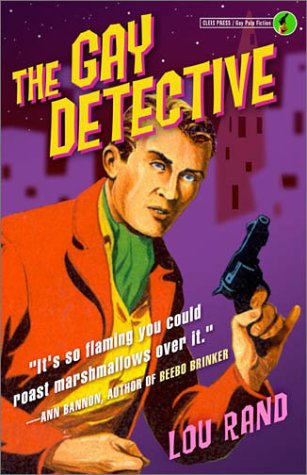
The Gay Detective

The Gay Detective Review


Originally published in 1961, The Gay Detective by Lou Rand is a highly recommended "pulp fiction" gem that combines the "hard-boiled" detective genre with a brightly flaming twist. Set in a fictional city that mirrors San Francisco, and set among a scene populated by handsome thugs, vituperous drag queens, remorseless businessmen and cops and politicians on the take, The Gay Detective paints a sometimes shocking, sometimes flamboyant, often over-the-top, but consistently engaging and entertaining noir picture which is certain to be relished by hard-boiled mystery fans for its irony, camp, and deftly written plot turns.


The Gay Detective Overview


Before there was Armistead Maupin's Tales of the City, vintage pulp writer Lou Rand delivered this high-camp masterpiece. Set in Beat-era gay-mecca-in-the-making San Francisco, the 1961 novel stars a sissy gumshoe, his butch ex-Marine assistant, a nymphomaniac on the make, and plenty of dishy humor. This flamboyant whodunit is now available for the first time in three decades.


Available at Amazon Check Price Now!


*** Product Information and Prices Stored: May 09, 2010 05:11:27

Related : Watch TV Show Episodes Online Now
5/7/10

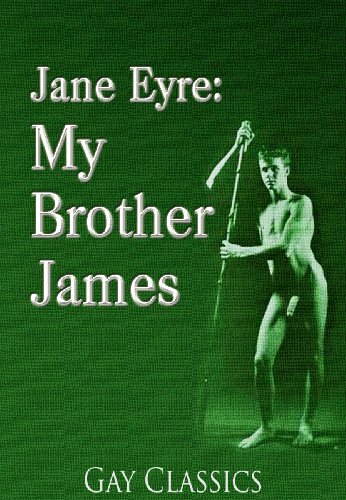
Jane Eyre - My Brother James (Gay Classic)

Jane Eyre - My Brother James (Gay Classic) Review


Generally, loved it, will be passing to the book club for review. The conclusion to Weathering Heights is great, the ending very haunting, loved it, loved the end, very romanic.
Ok so not everyone is in to the old stuff, we recommend the Sinbad and Tarzan series by Arius.
I've read most of the classic, they imply sex, and male glances at one another. HOney your not glancing in these books, your apart of it it. Love the story telling, the romance between the men and the hidden hardships of the era, have passed to the book club for review, the book club gives this one 5 stars.


Jane Eyre - My Brother James (Gay Classic) Overview


Jane Eyre - My Brother James - Is the retelling of the classic with a gay twist.
This book is illustrated with gay sex, male one on one sex and illustrations, if this offeneds you, do not buy this book.
This is the classic tale of love, passion, male lust and greed that end as no one will guess, or maybe you have. Yes, there is sex, and illustrations of sex, I cannot state this strongly enough.
Cum, take a journey into the days of old, into the country side that once was and into the lives of the manor house and find in the end the result of the adventure.
Other titles by this Author are:
Ride Em' Cowboy - Train Robbers
Tarzan's First Love
The Making of A Gay American Spy
Ride Em' Cowboy - The Store Clerk
Growing Up Gay
Soldiers - Prisoner of War
Islam - Religon of Hate
The Islamic Wars
Ride Em Cowboy-Cum Ride My Phony
Soldier-Prisoner of War
Soldier-Prisoner of War - New Edited
Frankenstein - For the Love of a Man
The GAY Vampire
The Cliff House Vampire
These Are My Children
Finding Simon
Ride Em' Cowboy – Dodge City
The Gay Vampire – The Journey Home
A Romance in the Wilderness
From Boys to Men
Ride Em’ Cowboy – The Grizzly
Sinbad – The Balloon Kingdom
Tarzan – The Awakening
Alien Encounter
Cum Ride My Pony
Drag Queen – Alice in Wonderland
Edward
Ghosts and Nightmares
Jane Eyre – My Brother James
Weathering Heights – Conclusion
Ride Em Cowboy – The Dude Ranch
Ride Em Cowboy – He Lived to Tell the Tale
Ride Em Cowboy – Indian Affairs
The Cliff House Vampire
Sinbad the Gay Sailor
Whispers in the Night


Available at Amazon Check Price Now!


*** Product Information and Prices Stored: May 07, 2010 09:26:34

Visit : Watch TV Show Episodes Online Now
5/6/10

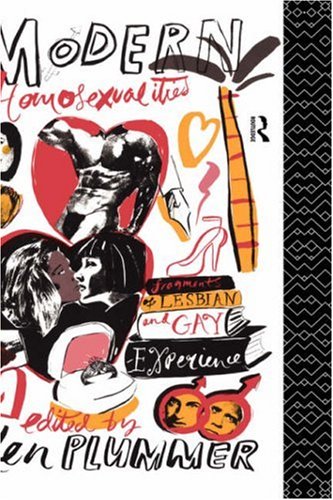
Modern Homosexualities: Fragments of Lesbian and Gay Experiences

Modern Homosexualities: Fragments of Lesbian and Gay Experiences Review


Modern Homosexualities: Fragments of Lesbian and Gay Experiences Overview


This collection of nineteen original essays by activists and academics both documents and analyzes the dramatic changes taking place in lesbian and gay experience over the last twenty years. It charts the growth of lesbian and gay studies and examines key issues for gay communities, identities, relationships, sexualities and politics. Edited by a leading author in the field, these essays mark a new confidence and maturity for the growing field of lesbian and gay studies.


Available at Amazon Check Price Now!


*** Product Information and Prices Stored: May 06, 2010 17:49:33

See Also : Watch TV Show Episodes Online Now
A Gay American Spy - What would you do for your country? How far would you go? (Gay Spy)

A Gay American Spy - What would you do for your country? How far would you go? (Gay Spy) Review


A Gay American Spy - What would you do for your country? How far would you go? (Gay Spy) Overview


What is real, what is not? What can be seen, what can not? Who is a Spy? Who Is Not?

This is the true story of just such a spy, an, American,and gay. This is a very odd story, one that many will not believe, many will question and others will outright dismiss it. Frankly, I don't care. This book was not written for anyone but the person who lived this unquestionably remarkable life. Justification, truth, its all here. Many will not want to hear it, others will not want to read it. The response is simple: then don't. Justification is not needed. The events in this book are real, they happened. Many of the places, names of people, and events have been alterned to protect the living, the nation, and the author. This is the story of Morris, the Gay American Spy who has seen it all, been a part of the spy world since 1975 and lived this remarkable life which had an impact on the United States and in some cases, the world. Here is that life.
Other titles by this Author are:
From Boys to Men
Ride Em' Cowboy - Train Robbers
The Making of A Gay American Spy
Ride Em' Cowboy - The Store Clerk
Growing Up Gay
Soldiers - Prisoner of War
Islam - Religon of Hate
The Islamic Wars
Ride Em Cowboy-Cum Ride My Phony
Ride Em' Cowboy – Dodge City
Ride Em’ Cowboy – The Grizzly
Weathering Heights – Conclusion
Ride Em Cowboy – The Dude Ranch
Ride Em Cowboy – He Lived to Tell the Tale
Ride Em Cowboy – Indian Affairs
The Cliff House Vampire
Sinbad – The Balloon Kingdom
Sinbad the Gay Sailor
Sinbad & The Diamond King
Sinbad and Mendor theMonster
Whispers in the Night
Tarzan – The Awakening
Tarzan's First Love
Tarzan His Own Kind
Tarzan and the Lost Empire
Alien Encounter
Cum Ride My Pony
Drag Queen – Alice in Wonderland
Edward
Ghosts and Nightmares
Jane Eyre – My Brother James
Soldier-Prisoner of War
Soldier-Prisoner of War - New Edited
Frankenstein - For the Love of a Man
The GAY Vampire
The Cliff House Vampire
These Are My Children
Finding Simon
The Gay Vampire – The Journey Home
A Romance in the Wilderness


Available at Amazon Check Price Now!


*** Product Information and Prices Stored: May 06, 2010 01:25:31

See Also : Watch TV Show Episodes Online Now
5/4/10

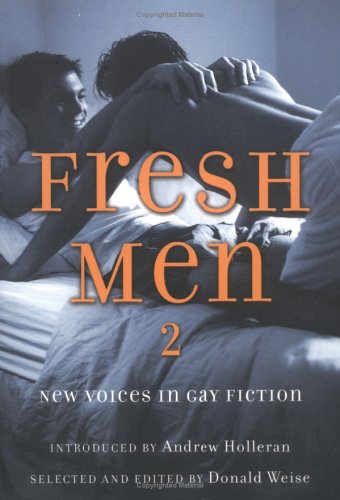
Fresh Men 2: New Voices in Gay Fiction (v. 2)

Fresh Men 2: New Voices in Gay Fiction (v. 2) Review


I read a lot of these collections having followed the Men On Men series Penguin did for years. I read the first of these and wasn't all that gung ho for it, but it didn't really deter me from trying this one out. This one is better than the first one, there is a story here and there that just doesn't work, as there are with most collections, but the majority of these stories are well done and many of these writers have or should be well on their way to full fledged novels by now. It is a good way to test out new writers to decide if you will like their stuff before committing to a full novel.


Fresh Men 2: New Voices in Gay Fiction (v. 2) Overview


Fresh Men 2 collects the best new writing by emerging gay authors from around the nation. With equal parts sensitivity and irreverence, the anthology speaks to the broad range of gay experiences. From stories of coming out, coming of age, self-representation and family to sex and love in the time of AIDS, from living in the closet to loving in a post-gay world, this book highlights the complexities of gay life. Fresh Men 2 is a groundbreaking collection that also embodies a wide spectrum of literary tastes, from works rich in experimental, transgressive elements to more conventional, traditionally crafted stories.


Available at Amazon Check Price Now!


*** Product Information and Prices Stored: May 04, 2010 12:40:08

Friends Link : Watch TV Show Episodes Online Now
5/3/10

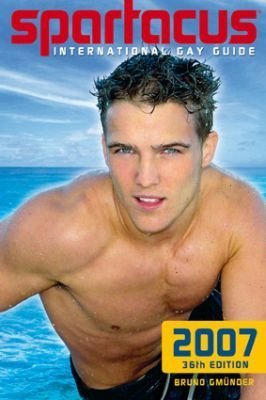
Spartacus International Gay Guide 2007

Spartacus International Gay Guide 2007 Review


I travel often and around the globe. Spartacus will bump out underware (or anything else for that matter) from my suitcase if needed. The previous review of only 4 stars is strange....this is the guide which all others are rated against. It's 5 out of 5 for global usage. Spartacus is truely the only guide you'll need. And at around 20 bux, why are we even talking about it? The cost is under 2 drinks at a bar cost-wise. This is one of my annual purchases. Buy it and you'll not regret it.


Spartacus International Gay Guide 2007 Overview


SPARTACUS INTERNATIONAL GAY offers rapid orientation to all the most important locations for the gay tourist: addresses, tips, and information for more than 160 countries worldwide. With over 22 000 addresses the SPARTACUS covers all the highlights for the gay man, Whether you are looking for an extraordinary hotel, the hottest clubs the most exciting gay beaches or the most popular bars, you will find all this and much more. Hot off the press!


Available at Amazon Check Price Now!


*** Product Information and Prices Stored: May 03, 2010 12:37:00

Visit : Watch TV Show Episodes Online Now
5/1/10

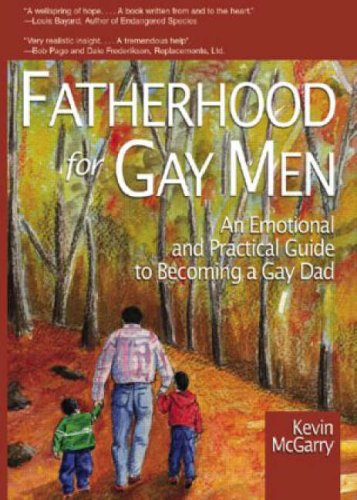
Fatherhood for Gay Men: An Emotional and Practical Guide to Becoming a Gay Dad

Fatherhood for Gay Men: An Emotional and Practical Guide to Becoming a Gay Dad Review


REVIEWED BY: Francis A. Martin, Ph.D.
Department of Counseling and Human Resource Development
South Dakota State University, Brookings.

APPEARED IN: THE FAMILY JOURNAL: COUNSELING AND THERAPY FOR COUPLES AND FAMILIES / July 2004

In my heart I knew that I was a natural dad, but intellectually I had to convince myself that I could do it?

Mr. McGarry's comment may seem to be a little odd to many of us. Most of us don't have to convince ourselves that we can do it when it comes to deciding to be a parent. Generally, we just do it, because we know that we can and because we want to. For many of us, finding an answer to the question about whether to become a parent is just a little more challenging than breathing.

But what if the person who wants to be a parent is a gay man? How does he enter the psychological and social zones of existence that allow him to know that his desire to be a parent is OK? And beyond the turmoil of sorting through the complex inner map that shows no clear roads to gay parenthood, how does a man become a gay father? What does the lawsay that he can do? How does he get a child? How much is it going to cost?

Among all of the questions and challenges, he must, in his own way, settle for himself the rightness of becoming a gay father. As McGarry reveals, this is no easy process. But as he also reveals, it is extraordinarily fulfilling and life affirming.

And then, he gets to work. Among many things, McGarry finds a way to complete a home study to show that he is capable of caring for a child, knowing that as he seeks to get it done, he may find a social worker who rejects the possibility of a man becoming a gay father. Then, of course, he must find a child within a limited time or he must have another home study done. This, however, is mostly easy stuff. Finding a child is the hard part. Paying for the whole process is another hard part, with costs of approximately U.S.,000, according to McGarry.

Luckily, for those who are interested in getting information about these matters, McGarry provides it. He gives details about home studies, locating children, the relevant laws in each of the United States, the costs involved in adoption, and much more. So, as McGarry invites his readers to share his search, with its uniquely internal and external aspects, its emotional and practical aspects, he gives insights and information that every prospective gay father needs. In response to this, the reader is likely to feel as much gratitude as intimidation, as much eagerness as dread, and as much real expectation as confusion.

McGarry traveled to Vietnam to adopt his children. He uses some of the sections of his book to describe his experiences that are associated with his Vietnam connections. Fortunately, he uses other sections to share the diary that he kept, revealing much of the substance that may be important for those who want to become a gay father and understanding for those who care about them. As opposed to seeing a picture of it, reading his diary entries is akin to smelling a rose and touching it.

In some important ways, this book does not comport with the standards of well-written books. The diary entries are not very efficient, although they are insightful and truly moving experiences to read. The discussion of state laws and practices
that may help an explorer to decide in which state he wants to become a gay father leaves the reader knowing a great deal but not enough. Sometimes, its ideas seem to be lacking in detail, as if the story should contain more than the author knows. Sometimes, its promise of being a significant resource for its readers exceeds the reach of possibility. However, if these few features of this book are the ones to which a reader gives significant attention, the importance of this book will have been missed. Serious and competent readers often discover that the author who has something important to say is more important and more influential than the author who writes well but has nothing of importance to offer. McGarry is a writer who has something important to say.

As a writer,Mr. McGarry has produced a reasonably good product. Frankly, though, evaluating him as a writer misses the significance of what he has accomplished. More than being a writer, he is a man who presents the experience of seeking to adopt a child and doing it and then writes from the experience of repeating the process. He reveals his sometime torment and sometime ecstasy, with serious swings of mood in between these two extremes, along with true grit and ingenuity in overcoming huge barriers. Because of his passion to disclose his experience to others, he attempts to provide a somewhat encyclopedic document, falling short in this short document, of course. Falling short in this way, however, matters very little when compared with his attempt to accomplish something that is deeply personal and newas a fundamentally important contribution to a major social change.

Given all that this book appeared to promise, I was skeptical of it. After reading it, I concluded that it is an important book that many parents should read. Clearly, men who aspire to be gay fathers must read it. Its importance, though, is bigger than this. Surely, it is a gift to these men as well as being a gift to the rest of us. The gift is that it helps men who want to be gay dads and helps the rest of us to understand our parenting a little better, but its larger gift is that it helps to initiate, legitimate, and facilitate major social change. Long after some of its shortcomings are forgotten, this book will be remembered because McGarry eased the way for many men who want to be gay ads and eased theway for the rest of us to be more understanding, fulfilled, and effective human beings. What better gift could a writer give? What better incentive for social change could we need?


Fatherhood for Gay Men: An Emotional and Practical Guide to Becoming a Gay Dad Overview


Get the inside story on a single gay man's struggle to adopt!

Fatherhood for Gay Men: An Emotional and Practical Guide to Becoming a Gay Dad is the story of one man's journey down the road less traveled—a single gay man adopting and raising his two sons. Author Kevin McGarry recounts his passage into parenthood after years of having his natural fathering instincts stifled by the limits—real and perceived—of being gay. This unique book details the emotional, financial, practical, and social realities of the adoption process for gay men.

From the author: "We take risks by coming out of the closet as gay men and at the end of the day, we are emotionally happier because we took those risks. By coming out, we are being true to who we are. The same goes for anyone, gay or straight, who has gut instincts for parenthood. I knew over the years that I had parenting instincts because I had this incredible envy of other dads. I would watch them with their kids and wish that somehow, I could have that role. It was painful at times because being gay, I didn't think parenting was in my life plan. Had more role models been available to me, the process would have been a little less difficult."

Much more than a "how-to" guide to adoption, Fatherhood for Gay Men is the personal account of a single gay man's struggle to become a father despite the real and imagined limitations of being a gay man. The book looks at the adoption process (domestic and international) from the inside, providing unique insight into:

conducting a homestudy
costs (fees and expenses)
what countries allow men to adopt
alternatives to adoption
life as a new parent
online resources
and a state-by-state review of adoption laws, categorized by "Completely Legal," "Favorable Climate," "Mixed Success," and "Illegal"

The book also includes results of the 2000 study by Gillian Dunne, senior researcher for the London School of Economics Gender Institute, of 100 gay fathers and fathers-to-be. "Fatherhood for Gay Men: An Emotional and Practical Guide to Becoming a Gay Dad is a heartfelt and heartwarming story of a father's refusal to be denied a family.


Available at Amazon Check Price Now!


*** Product Information and Prices Stored: May 01, 2010 04:45:16

Visit : Watch TV Show Episodes Online Now